You're about to step on a padel court. Here's everything you need to know so you don't spend the first hour confused.
Padel has a reputation for being easy to pick up. That reputation is mostly accurate. The shots are simpler than tennis, the court is smaller, and the game rewards positioning more than raw power. But the rules have one or two wrinkles that catch almost every beginner by surprise, and walking on court without knowing them turns the first session into an expensive lesson in real time.
This page covers every rule you need, from the dimensions of the court to what happens when the ball hits a wall, laid out as clearly as possible for someone playing for the first time.
What Padel Is (In One Paragraph)
Padel is a racket sport played on an enclosed court with glass and metal walls. Two teams of two, one ball, and a net in the middle. You score points by landing the ball in the opponent's side in a way they cannot return. Sounds like tennis. Plays differently.
The Court: Understanding What You're Playing On
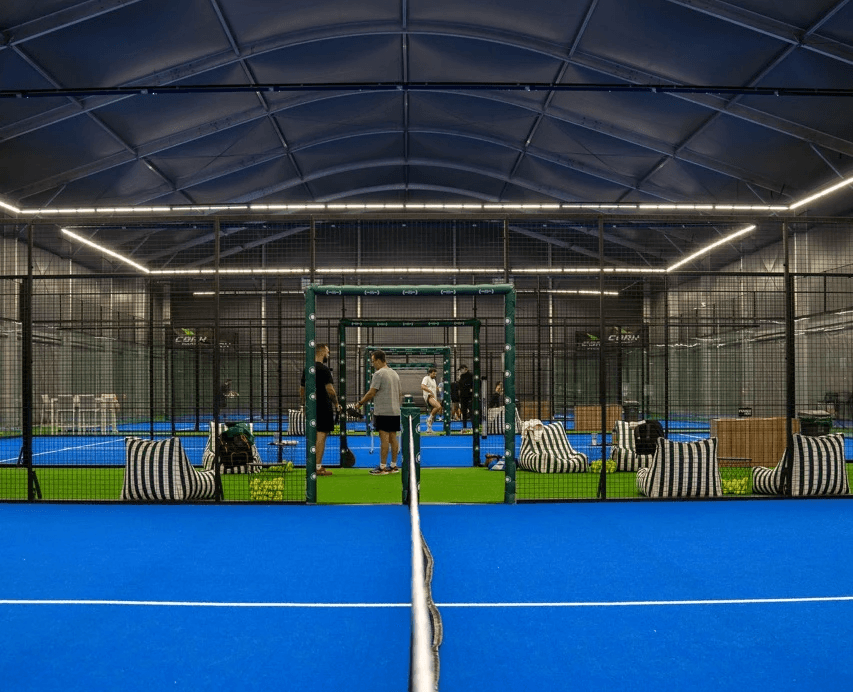
A padel court measures 20 metres long and 10 metres wide. That is about a third the size of a full tennis court. The enclosed structure changes everything about how the game works: the back walls are solid glass or transparent acrylic, and the side walls run glass at the back and metal mesh toward the net. Both are in play.
Here is the breakdown:
The service boxes divide each half of the court. They work the same way as tennis service boxes. The server hits diagonally into the opponent's service box.
The net sits at 88 centimetres in the centre, rising to 92 centimetres at the posts. Lower than a tennis net, which matters for shot selection.
The back walls are glass, 3 metres high at the full-wall section. The ball can bounce off these walls and remain in play, which is why you need to understand the wall rules before you step on court.
The side walls run glass for roughly the back 5 metres and metal mesh for the front section closer to the net. Only the glass section allows live ball play. If the ball hits the metal mesh without first bouncing off the floor, it is out.
The enclosed court is the defining feature of padel. Everything below comes back to it.
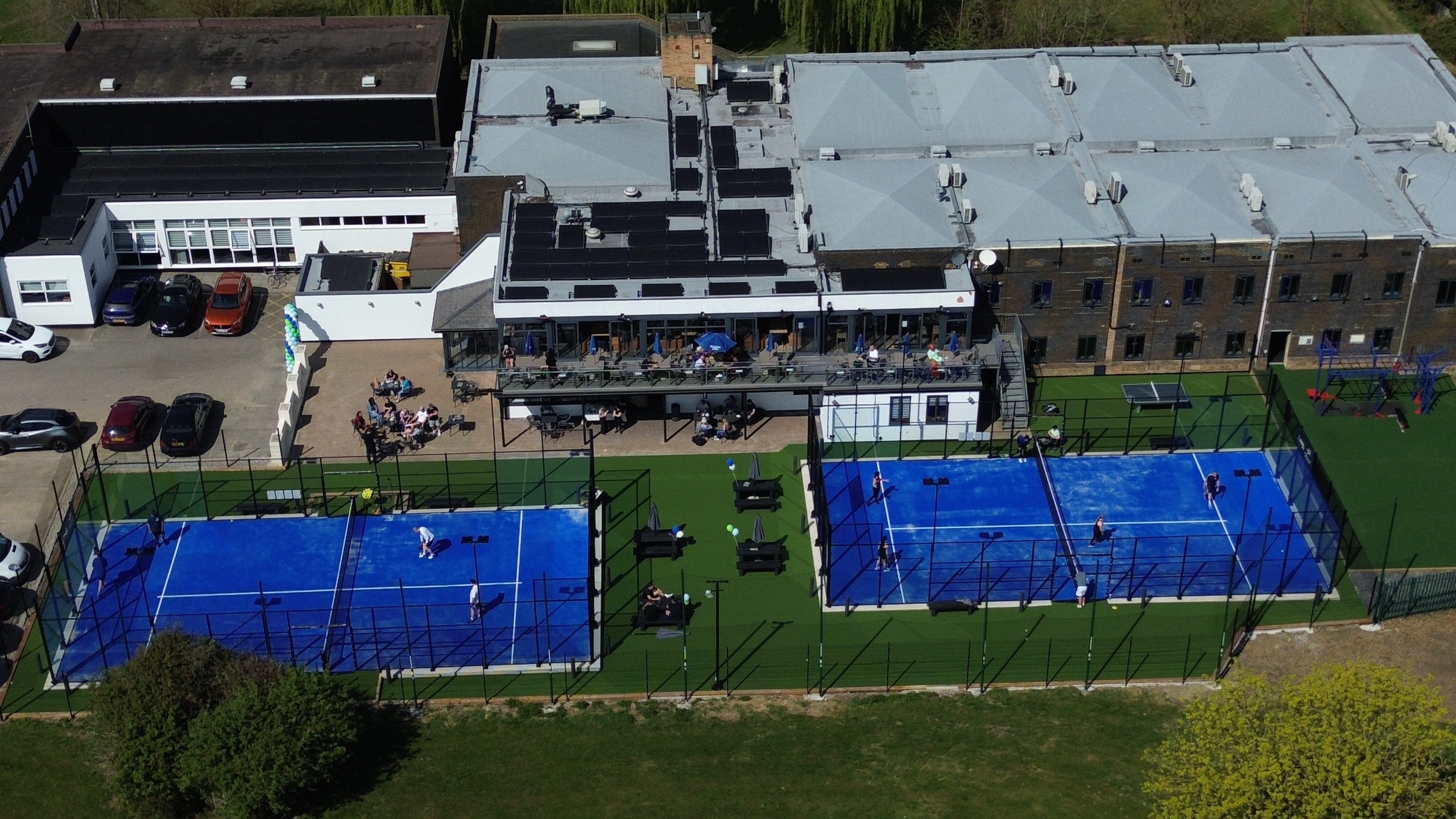
Photo by OCHAPPS, Wikimedia Commons, CC BY-SA 4.0
Scoring: Identical to Tennis
Padel uses tennis scoring exactly. If you already know tennis, you know padel scoring. If you don't, here it is.
Points within a game: 0 (love), 15, 30, 40. Win the point at 40 to win the game. If both teams reach 40, that is deuce. From deuce, one team needs to win two consecutive points: first point is advantage, second wins the game.
Sets: First team to 6 games wins the set, but you need to win by two. If the set reaches 6-6, you play a tiebreak.
Tiebreak: First team to 7 points wins, again needing to win by two. If it reaches 6-6 in the tiebreak, keep going until someone leads by two.
Match format: Most social and club matches use best of three sets. Tournaments and competition play often use best of three as well, with super tiebreaks (first to 10 points) replacing a full third set at some levels.
One thing that catches tennis players: the score still matters regardless of who is serving. Unlike squash or volleyball, you can win a point as either team on any serve.
How to Serve in Padel
This is where most beginners go wrong in the first five minutes.
The serve is underhand. You cannot serve overhand in padel. The ball must drop below your waist before you make contact. Specifically, you must allow the ball to bounce once on the ground before striking it. You cannot volley the serve.
The ball must bounce before you hit it. You drop the ball, let it bounce once, then strike it underhand. This is a hard rule.
Direction: The serve is always hit diagonally, landing in the opponent's service box cross-court. Same as tennis. The right-side player always serves to the opponent's right service box, the left-side player to the opponent's left.
Wall interaction on the serve: After bouncing in the service box, the ball is allowed to hit the side wall. It is not allowed to hit the back wall after bouncing. If the serve bounces in the correct box and then hits the back glass wall, the receiving team wins the point. This catches beginners most often on their own serve, especially when trying to hit deep.
Let: If the ball clips the net and still lands in the correct service box, you replay the serve. Same as tennis.
Two chances: You have two serve attempts per point. Fault twice and the receiving team wins the point.
What's In and What's Out: The Wall Rules
This is the part that makes padel different from every other racket sport. Read this carefully because it will come up on your first point.
Off the back wall is in play. If the ball bounces on the floor first and then hits your back wall, you can still play it. You can let the ball come off the wall and hit it back. This is completely legal and forms the basis of padel's defensive game. The glass walls are not out of bounds. They are part of the court.
Off the side glass is in play, with one condition. The ball must bounce off the floor before hitting the side wall for the play to remain live. If the ball flies through the air and hits the side glass without bouncing first, it is out. After the floor bounce, side wall contact is completely fine.
Off the metal mesh is out. The metal fence sections at the front sides of the court are never in play. If the ball hits the metal mesh at any point, before or after a floor bounce, the point ends.
Landing outside the lines is out. If the ball lands outside the court boundaries painted on the floor without hitting a wall first, it is out. Standard.
Quick wall rules summary:
- Floor bounce first, then back glass: live, keep playing
- Floor bounce first, then side glass: live, keep playing
- No floor bounce, hits any wall: out
- Ball hits metal mesh at any point: out
Photo by Anton Gustafsson, Wikimedia Commons, CC BY 2.0
Volleys and Overhead Shots
You can volley in padel, hitting the ball before it bounces, anywhere on court except during the serve. Volleys are a major part of padel strategy. Most points are won at the net.
The bandeja and vibora: These are the two main overhead smashes used in padel. The bandeja is a controlled, flat shot designed to keep the ball deep and low after hitting the back glass. The vibora is a slice that kicks sideways after bouncing. Both require specific technique to execute reliably, but knowing they exist explains why the ball sometimes bounces unpredictably after an overhead.
Playing off the back wall: Advanced players use the back glass deliberately. Lob the ball over their heads and they will often step back, let it hit the back wall, and play a shot off the rebound. This is legal, it looks impossible the first time you see it, and it is one of padel's more spectacular standard plays once you understand the wall rules.
The Rule That Trips Beginners Most
Let the ball bounce once before worrying about the walls.
Almost every beginner makes the same mistake in the first session. They see the ball heading toward the back glass and freeze, unsure whether to play it or call it out. The answer is almost always to play it. If the ball bounced inside the court, whatever happens next with the glass is almost certainly still live.
The two exceptions, both covered above: the ball hits metal mesh (out) and a serve that bounces in the box then hits the back glass (fault). Those are the two wall-related outs you actually need to remember. Everything else involving the glass walls after a floor bounce is in play.
Common Beginner Mistakes
Serving overhand. The reflex from other sports. The fix: drop the ball, watch it bounce, then hit it underhand. Every time.
Calling a glass wall shot out. It is not out. Play it. The only time glass means out is a serve that bounces and then reaches the back wall.
Not switching sides after each game. Players change ends after each game in a set. Easy to forget in a relaxed social game but essential in any organised format.
Staying at the baseline. Padel is a net-dominant sport. The team controlling the net wins most points. After the serve, move toward the net. Do not stay back and hope.
Hitting into the metal fence. New players sometimes hit toward the front sides of the court and are surprised when the point dies immediately. The metal fence is always out. Aim for glass or the court itself.
Forgetting the two-bounce rule. Once the ball has bounced twice on your side, the point is over. You cannot let the ball double-bounce and still play it. Same as tennis.
Quick Rules Cheat Sheet
| Rule | What Happens |
|---|---|
| Serve contact | Underhand only, ball must bounce once before you hit |
| Serve direction | Always diagonal, cross-court into opponent's service box |
| Serve fault: back glass | Ball bounces in service box, then hits back glass: fault |
| Ball off back glass (after floor bounce) | In play, keep playing |
| Ball off side glass (after floor bounce) | In play, keep playing |
| Ball hits metal mesh | Out, point over, always |
| Ball hits any wall before floor bounce | Out |
| Scoring | 15, 30, 40, game - same as tennis |
| Sets | First to 6 games, win by two; tiebreak at 6-6 |
| Tiebreak | First to 7 points, win by two |
| Volley | Legal anywhere except serving |
| Net clip on serve | Let, replay the serve |
| Ball bounces twice | Point lost immediately |
Frequently Asked Questions
What are the basic padel rules?
Four players on an enclosed glass court. Serve is underhand with a bounce before contact, hit diagonally into the opponent's service box. Scoring is identical to tennis. The ball remains live off the glass walls after a floor bounce. Metal mesh fence sections are always out.
How does scoring work in padel?
Same as tennis: 15, 30, 40, game. First to 6 games wins the set, needing to lead by two. Tiebreak at 6-6 in any set. Most matches use best of three sets.
Can the ball hit the wall in padel?
Yes, with one condition. After a floor bounce, the ball coming off the back or side glass walls is in play and you should keep hitting. If the ball hits any wall before bouncing off the floor, it is out. Metal mesh sections are always out regardless.
How do you serve in padel?
Underhand only. Drop the ball, let it bounce once on the floor, then hit it below waist height diagonally into the opponent's service box. Two attempts per point. If the ball clips the net and lands in the correct box, replay the serve.
The scoring is tennis. The serve is underhand. The glass walls are in play after the bounce. The metal fence is always out.
If you are getting started in Limassol, there are courts across the city to book your first session. For padel venues across Cyprus including Paphos, Nicosia, and Larnaca, padelcyprus.com has the full picture.