Walk into any padel shop in Limassol and ask for "the best padel racket" and you will probably walk out with something expensive that does not match your game. The best racket depends entirely on how you play.
The right question? How to choose a padel racket that matches your game.
Choosing the right racket comes down to a few key factors. Here's what actually matters.
1. Racket Weight: Why 360-380g Matters More Than You Think
Ignore the marketing about "lightweight power." Physics doesn't work that way. Heavier rackets generate more power because mass multiplied by acceleration equals force. But heavier also means slower swing speed and more arm fatigue.
The sweet spot for most players sits between 360-380 grams. General guidance: 360-370g works well for beginners, 370-380g for intermediate players, and 380g+ for advanced players who have developed proper technique.
Rackets under 360g tend to lack power, while those over 385g can cause arm fatigue during longer sessions, especially in warm conditions.
Women often prefer 360g or lighter. Men often gravitate toward 370-385g. But individual preference trumps gender generalizations. Try before you buy.
2. Shape Psychology: Round vs Teardrop vs Diamond
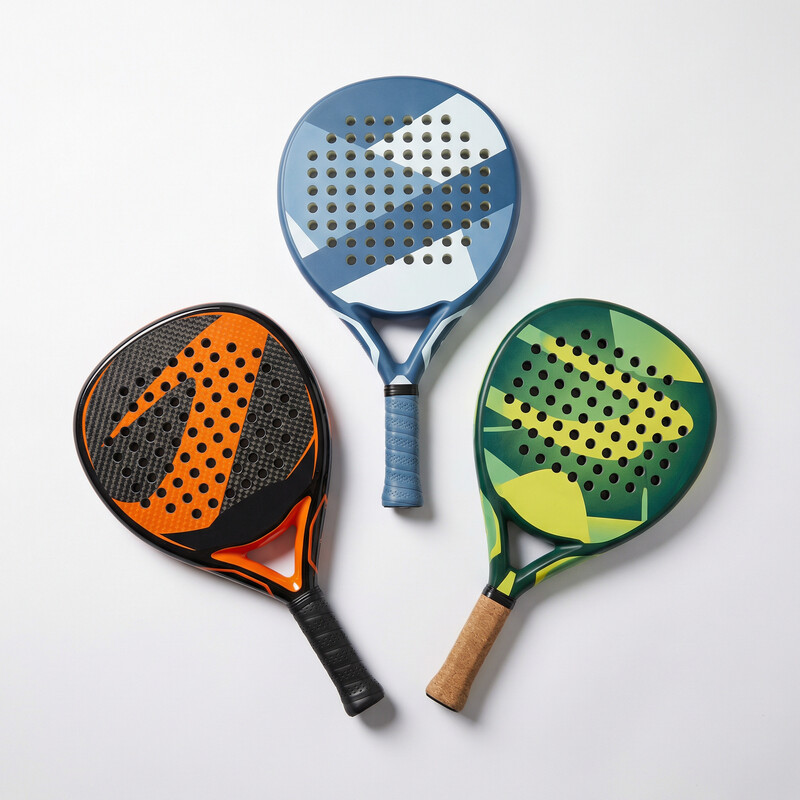
Racket shape determines where the sweet spot sits and how much power versus control you get. Most beginners obsess over this. Most advanced players care less than you'd think.
Round rackets have a larger, more centered sweet spot, making them forgiving and control-focused. Great for beginners who miss-hit frequently. Less power potential, but more consistent contact.
Diamond rackets move the sweet spot toward the top, creating a longer lever arm for power. Harder to control, smaller sweet spot, but massive potential for winning shots when you connect cleanly.
Teardrop splits the difference. Sweet spot sits in the middle, balancing power and control. Most players end up with teardrop rackets after trying extremes at both ends.
Shape matters less than weight and quality. A well-made round racket generates more power than a cheap diamond racket. Start with shape that matches your current skill level, upgrade quality as you improve.
3. Balance Point: Finding Your Sweet Spot
Balance point determines how the racket feels in your hand. Head-heavy rackets (balance toward the top) generate power but require more effort to maneuver. Handle-heavy rackets (balance toward your hand) offer control and quick reactions but less power potential.
Most padel rackets fall between 26-27cm balance point measured from the bottom of the handle. 26cm feels more control-oriented, 27cm+ feels more power-oriented.
On most padel courts, control tends to be more important than raw power, especially during fast net exchanges.
Test different balance points by picking up demo rackets at local clubs. A padel coaching session in Limassol is also a great way to try different rackets with guidance from someone who knows what to look for.
4. Core Materials That Actually Make a Difference
The foam inside your racket affects feel more than most players realize. Two main types are commonly used: EVA foam and standard polyethylene foam.
EVA foam (found in higher-end rackets) responds to temperature. Hard and powerful when cold, softer and more controlled when warm. This is worth considering in warmer climates like Cyprus.
Standard foam maintains consistent feel regardless of temperature but offers less power potential and shorter lifespan. Fine for recreational players, limiting for competitors.
Carbon fiber surfaces add stiffness and power but cost significantly more. Fiberglass surfaces offer good feel at lower prices. Carbon is generally aimed at more competitive players, but it comes down to budget and preference.
5. Grip Size and Cyprus Heat: What Works
Grip circumference ranges from 4 1/8" to 4 3/4" on most padel rackets. Cyprus heat makes your hands swell slightly and sweat more, affecting grip size preference.
Standard advice is to measure your hand and pick accordingly. In warmer climates, some players prefer going slightly larger to account for hand swelling during play. Worth experimenting to see what feels right.
Overgrips are inexpensive and let you adjust feel without buying new rackets. In the Cyprus heat, overgrips wear out faster than in cooler climates, so expect to replace them regularly.
Grip shape matters too. Some rackets use octagonal handles for better feel, others stick with round. Subtle difference, but noticeable after extended play.
6. Brands Available in Cyprus
Babolat, Bullpadel, NOX, Adidas, and Wilson are among the brands commonly found in Cyprus padel shops.
Babolat is one of the most established brands in racket sports and has a wide padel range across all price points.
NOX is a Spanish brand focused exclusively on padel, with models across all levels. Their ML10 series is one of their most well-known lines.
Bullpadel is another major Spanish padel brand with a wide range. Their Hack series is popular among power-oriented players.
Wilson has expanded into padel, leveraging their racket sport experience. Worth checking out if you are coming from a tennis background, as the feel may be familiar. You can find them at several padel courts in Limassol.
Avoid unknown brands at suspiciously low prices. Established brands hold up better and offer consistent quality. If unsure, renting at a club first is a smart way to figure out what suits you before committing.
7. Where to Buy Padel Rackets in Limassol (And What to Avoid)
Several clubs in Limassol sell padel rackets, and staff can usually help you pick the right one based on your level and preferences.
Most clubs carry several brands with multiple models each. Staff can help narrow down options based on your level and playing style.
Online shopping works for experienced players who know their preferences. Beginners benefit from handling rackets physically and getting local advice.
If a shop or club offers you the chance to try a racket before buying, take it. Your investment deserves proper testing.
Keep in mind that ordering from overseas may involve extra shipping and duties. Compare total costs with local prices before buying online.
When You Know You've Found the Right Racket
The right racket disappears during play. You stop thinking about equipment and focus on the game. Shots feel natural, not forced. Your arm stays comfortable after long sessions.
Bad rackets make themselves known quickly. Too heavy and your arm aches. Too light and shots lack authority. Wrong balance and every stroke feels awkward.
Finding the right racket often takes a few attempts. Don't expect to nail it on the first try. Padel racket preference evolves as your game develops.
With regular play, rackets do wear out over time. UV exposure, heat, and repeated impact gradually affect performance. Keep an eye on how yours feels and replace when it starts losing its response.
Start with something from an established brand at a mid-range price point, play for a few months, then reassess. Your preferences will clarify with experience, making your next purchase much more targeted.
The best padel racket is the one that suits your current game, not the one that looks impressive on the court. Choose based on how it performs during play, not how it appears in your bag.
Most clubs have pro shops where you can handle different rackets before buying. Check padel prices in Limassol to compare what each venue charges. That hands-on feel is worth more than any guide.